Nest Company’s DPP
Our trust tool (Digital Trust) designed to support circular economy models
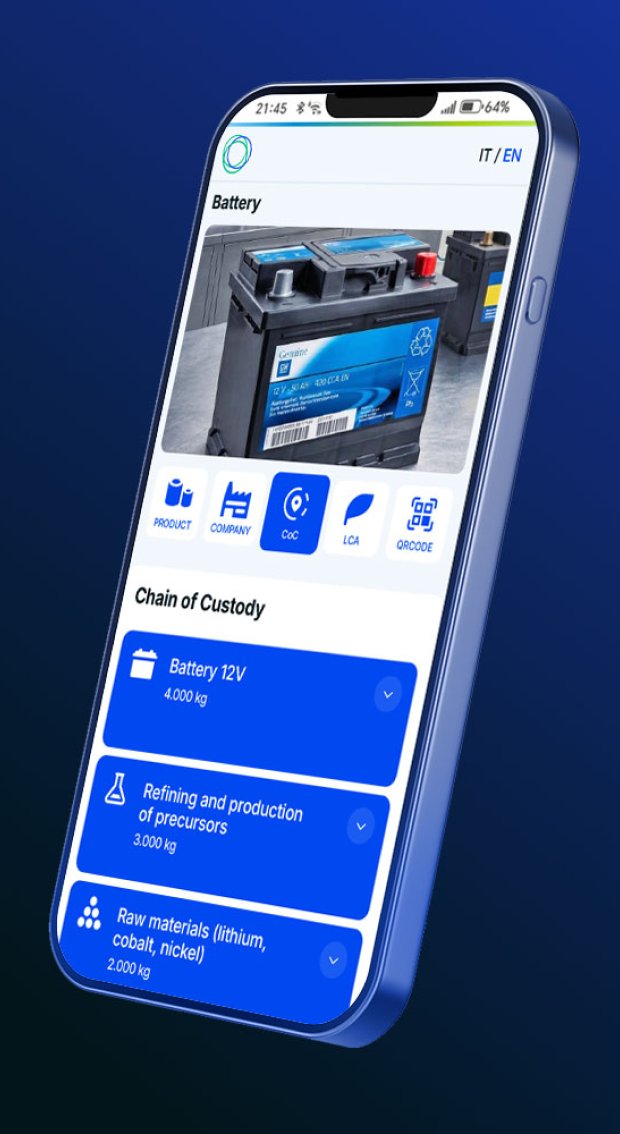

Our trust tool (Digital Trust) designed to support circular economy models
Why companies must comply with regulations such as the Ecodesign for Sustainable Products Regulation (ESPR)

What it is for and what the goal of the Digital Product Passport is

The no-code digital platform for regulatory compliance

Nest’s blockchain, accessible and sustainable

Proprietary technologies for the certified data infrastructure

Our software guarantees quality, security and data protection

Positioning, vision and goals of a company that turns sustainability into measurable value

A growth path driven by vision, skills and innovation
What are you interested in?
The Nest Company

Positioning
Evolving European regulation and growing attention to sustainability and the circular economy are redefining how companies manage data, processes and supply chains. In this context, transparency, traceability and compliance are no longer optional but fundamental requirements.
Nest Company positions itself as a technology enabler in this scenario, operating at the intersection of digital innovation and European regulation, with the aim of making data reliable, verifiable and usable as a valuable asset.
The business model combines: software licences, which guarantee margins and stability; a SaaS service, which enables scalability and growth.

History and team
Founded in Milan in 2021, Nest Company stems from the vision of entrepreneurs and managers with solid experience in finance and industry, gained in complex production contexts, combined with a strong vocation for technological innovation.
We specialise in developing proprietary blockchain-based software solutions designed to support the circular economy and advanced data management.
Software development
Our vision
Technology is the enabling element of sustainability and the circular economy, making data traceability, verifiability and regulatory compliance possible and turning trust and transparency into measurable, scalable results along the entire value chain.

Promote trust between companies, institutions and citizens, improving transparency in processes related to sustainability and the circular economy.
Build a large-scale blockchain ecosystem dedicated to trust, transparency and verified sustainability.
Provide companies in different industrial sectors with efficient, scalable and ready-to-use technology solutions for sustainability and compliance through patented no-code platforms
Goals
In 2025 Nest began its growth path and is currently working on bringing in new partners to support the scaling phase.
The goal is to build a large-scale B2B2C blockchain ecosystem, positioning itself among the main European players and defining a reference protocol for managing verifiable data along the supply chain.
Having reached an advanced level of technological development and initial market validation, we have entered a phase of expansion and consolidation.
Strategic priorities include:



Omnisyst S.p.A.
Strategic Investor 2025
Algebris Green Transition Fund
B.Tracking

Nest Chain


Enable reliable processes, reduce operational risk and guarantee the quality of information along the entire value chain. Choose Nest Company’s technology.