Nest Company’s DPP
Our trust tool (Digital Trust) designed to support circular economy models
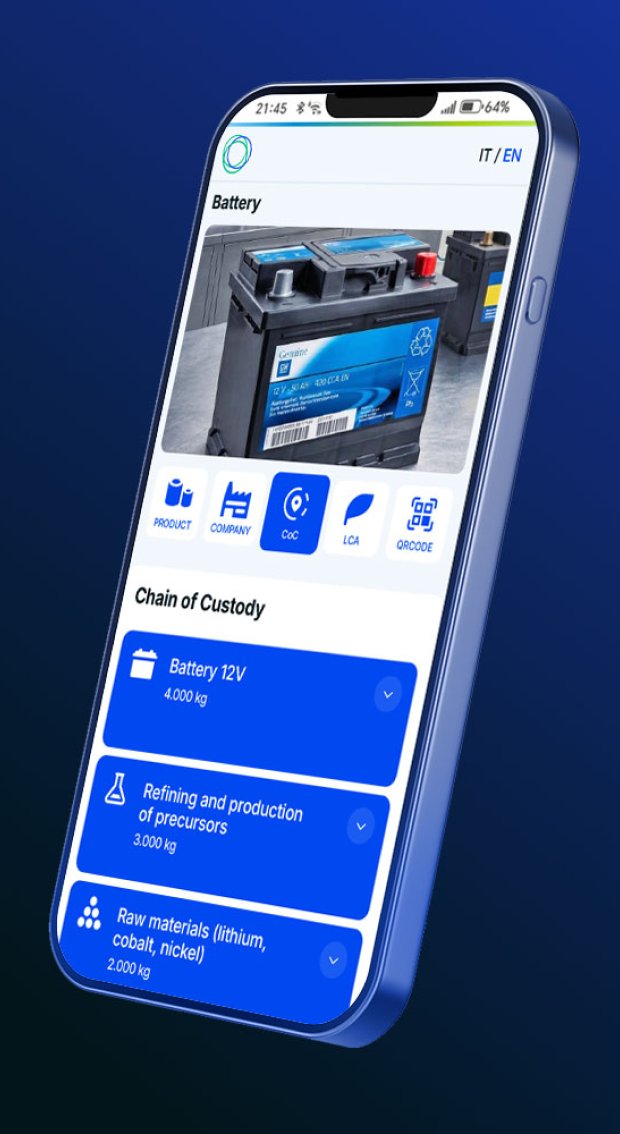


Our trust tool (Digital Trust) designed to support circular economy models
Why companies must comply with regulations such as the Ecodesign for Sustainable Products Regulation (ESPR)

What it is for and what the goal of the Digital Product Passport is
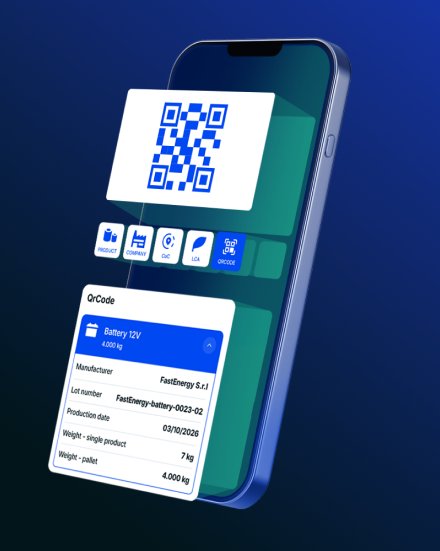
The no-code digital platform for regulatory compliance

Nest’s blockchain, accessible and sustainable

Proprietary technologies for the certified data infrastructure

Our software guarantees quality, security and data protection

Positioning, vision and goals of a company that turns sustainability into measurable value

A growth path driven by vision, skills and innovation
What are you interested in?
Digital Product Passport

In 2020 Europe adopted a plan to move to a circular economy: the Circular Economy Action Plan (CEAP).
The Circular Economy Action Plan led to the ESPR, the framework for product design. The Digital Product Passport is one of its tools: it makes the required data available for the products covered, in accordance with applicable delegated acts and sector-specific legislation.
The Ecodesign for Sustainable Products Regulation is the framework law, in force since July 2024. On its own it does not set obligations product by product: it lays down the general rules and refers, for each sector, to a delegated act stating which data is needed and from when. For a company this means it will have to collect and publish in the passport information such as material composition, recycled content, repairability and end-of-life instructions. The first sectors in focus are iron and steel, textiles, aluminium and tyres.
The Commission is preparing the Circular Economy Act and plans to propose it by the end of 2026 to support the market for secondary raw materials and the circular economy. This is a legislative initiative timetable, not the date when new business obligations apply.

The ESPR provides the framework: delegated acts will define the products covered, passport data and application dates. Adopting an act does not immediately trigger an obligation: adoption, entry into force and application are distinct stages.
Other legislation provides for passports for specific categories, such as batteries and detergents, with its own scope and timelines. For packaging, the PPWR governs labels and digital data carriers: these obligations do not all amount to a DPP.
Both sets of rules require reliable data throughout the supply chain. Suppliers may be asked for information for a customer’s passport: this does not automatically require a separate DPP for every component or material.
From 18 February 2027, Article 77 of Regulation (EU) 2023/1542 requires a passport for light means of transport batteries, industrial batteries with a capacity greater than 2 kWh and electric vehicle batteries placed on the market or put into service. This date is set by the Regulation and does not apply indiscriminately to all batteries.
New rules, new obligations and set timelines for each sector
Discover the dates
Regulation (EU) 2025/40 generally applies from 12 August 2026, with later, specific obligations for labels and digital data carriers. The dates in Article 12 also depend on implementing acts. The PPWR does not impose a universal DPP for all packaging; information to be coordinated with any product passport depends on the applicable requirements.
New rules, new obligations and set timelines for each sector
Discover the dates
Regulation (EU) 2026/405 provides for a digital passport for each detergent model and each surfactant model intended for the end user. It generally applies from 23 September 2029, with transitional provisions. Digital labelling is distinct from the passport and does not replace all physical information in every case; implementing acts specify the DPP’s technical requirements.
New rules, new obligations and set timelines for each sector
Discover the dates

The Commission’s timetable indicates when it plans to adopt acts for different products. Plans may change: these are not the dates when passports automatically become mandatory. Scope, required data and application will be specified in each act.
Article 4(4) of the ESPR generally provides for at least 18 months between a delegated act’s entry into force and its application, with justified exceptions. Adoption, publication and entry into force are distinct stages: the actual date must be checked in the act.

To identify the applicable deadline:
check the product, the adopted act and its application date.

| Sector | Legal basis | Adoption / preparation (planned) | Application of the DPP obligation |
|---|---|---|---|
| LMT, EV and industrial batteries > 2 kWh | Reg. (EU) 2023/1542, Art. 77 | Regulation adopted | 18 February 2027 |
| Textiles and clothing | ESPR | Q4 2027 (indicative) | To be set in the delegated act |
| Iron and steel | ESPR | Q4 2026 (indicative) | To be set in the delegated act |
| Aluminium | ESPR | 2027 (indicative) | To be set in the delegated act |
| Footwear | ESPR Working Plan 2025–2030 | Study expected by the end of 2027 | Timeline to be determined |
| Consumer electronics (ICT) | ESPR | 2029 (indicative) | To be set in the delegated act |
| Furniture | ESPR | 2028 (indicative) | To be set in the delegated act |
| Tyres | ESPR | 2027 (indicative) | To be set in the delegated act |
| Construction products | Reg. (EU) 2024/3110 | DPP system act planned for 2027 | Depends on the acts and products covered |
Sources checked: 4 November 2026. Indicative dates concern the adoption or preparation of acts, not a deadline already fixed for businesses.
Verifiable claims
Different names and acronyms, one direction: what a company claims about its product must be provable with verifiable data. The digital passport is the tool that makes this data available, and The Nest Company specialises in making it certain from the source.
Digital Product Passport

Digital Product Passport

Digital Product Passport
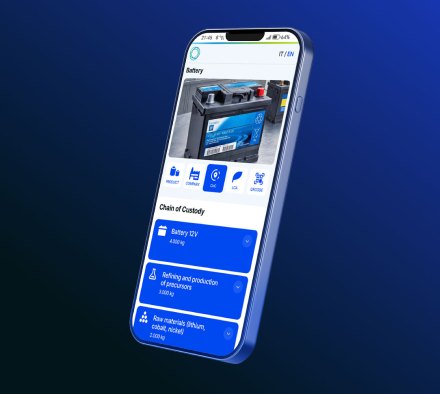















Enable reliable processes, reduce operational risk and guarantee the quality of information along the entire value chain. Choose Nest Company’s technology.